
source https://blog.turbotax.intuit.com/health-care/the-turbotax-guide-to-marketplace-open-enrollment-20386/
While it is a topic most retirees hope to avoid ever dealing with, the reality is that not all retirement income plans will be successful. Whether due to a retiree’s refusal to plan, reluctance to take the advice of a professional, or simply due to unfortunate circumstances which were outside of a retiree’s control – failures in funding retirement can and do occur. In fact, financial planners routinely do Monte Carlo projections for retirees to determine their prospective probability of failure, especially given growing awareness of sequence of return risk.
Yet given the reports of low levels of both objective measures of retirement preparedness (such as savings) and subjective measures of retirement preparedness (such as retirement confidence), many financial advisors may be surprised to learn that bankruptcy rates among those over age 65 appears to be less than 3 per 1,000, and actually declines among older retirees. So, what’s going on? If retirees are living longer than ever – which should be making retirement more difficult than ever to afford and sustain, especially given the long-term impact of sequence of return risk – then where are all of the bankrupt retirees?
In this guest post, Derek Tharp – our Research Associate at Kitces.com, and a Ph.D. candidate in the financial planning program at Kansas State University – examines bankruptcy among retirees, finding that the reality is that bankruptcy may not be a great indicator of retirement income planning failure. A retiree who blows through their nest egg doesn’t necessarily end up bankrupt, they simply need to adjust their spending downwards to their new reality. Social Security plus public assistance represent the true consumption “floor” for most. Further, bankruptcy may not even be a great indicator of actual financial strain, as given the rules surrounding bankruptcy, the ways that retirees deplete their retirement assets does not necessarily trigger an actual bankruptcy filing, especially in light of the ways in which bankruptcy laws favor those in retirement.
Nonetheless, the point remains: with longer life expectancies and struggles with retirement preparedness, especially combined with the difficult markets of the past 15 years, the retiree bankruptcy rate is shockingly low. Which suggests that the overwhelming majority of retirees facing retirement shortfalls really are able to downsize their lifestyle to avoid financial ruin when the time comes. Of course, few retirees want to risk even a major lifestyle setback in retirement if they can avoid it. Still, though, if most retirees really are capable of making spending adjustments when necessary… shouldn’t those potential adjustments be better reflected in financial plans in the first place?
Welcome back to the forty-fourth episode of the Financial Advisor Success podcast!
My guest on today’s podcast is Jake Kuebler. Jake is the President of Bluestem Financial Advisors, an independent RIA based in Champaign, Illinois, that provides a combination of financial planning, investment management, and tax preparation with 4 staff members for nearly 100 clients using a comprehensive annual retainer model.
What’s really unique about Jake’s business, though, is that he’s actually the next generation successor owner of Bluestem, having spent the past 5 years buying out the founding owner, Karen Folk, while nearly doubling the size of the practice along the way. Oh, and he just turned 30. Which means he started this internal succession plan as a buyer when he was just 25.
In this episode, we talk in depth about how Bluestem built a niche focus on serving college professors and administrators (as they are based in the hometown of the main University of Illinois campus!), why they chose to include tax preparation as a part of their annual service offering, the structure of Bluestem’s annual retainer fee model and how it changes from upfront to ongoing clients, how their retainer model structure is allowing them to grow the business serving a substantial segment of young professionals in the Champaign area in addition to retirees, and the business management spreadsheet that Jake uses to monitor and track the key metrics of his advisory firm along the way.
From there, we also talk about the details of the actual succession plan that Jake executed with the founder, how they eventually came to terms on setting a price for the internal succession plan of a hard-to-value solo advisory practice, the way the purchase was structured and funded, and how it was balanced to share the upside for both Jake as the buyer, and Karen as the seller, for any growth that happened after the terms of the deal were set.
And be certain to listen to the end, where Jake shares his own advice to other young advisors looking to buy into an advisory firm and be a succession plan, about how to push the conversation forward when the founder just doesn’t seem to want to sell…. and how to know when it’s time to cut bait and leave and find another opportunity instead.
So whether you’ve been curious to see an example of how an internal succession plan is structured, to hear the perspective of the buyer’s side of a succession plan, or just want a glimpse into the world of a successful retainer-based practice with a clear niche, I hope you enjoy this episode of the Financial Advisor Success podcast!
 HMRC have been busy, behind the scenes, shaking things up with regard to the personal data they hold on UK taxpayers. They've been pulling in - rather successfully - personal data from various different government departments and bringing all that data into one central place for both them and us to see, whenever the need arises. This is all part of their longer-term plan for Making Tax Digital or 'MTD' as it's known in the tax and accounting world. So, with that in mind, this is the first in a series of posts that introduces MTD and a crucial part of that; Personal Tax Accounts (PTAs). In this series of articles we'll discuss what MTD will mean for most of us, we'll look at the kinds of data that will be stored, see how it'll affect us and, lastly, see if there is anything that we'll need to do.
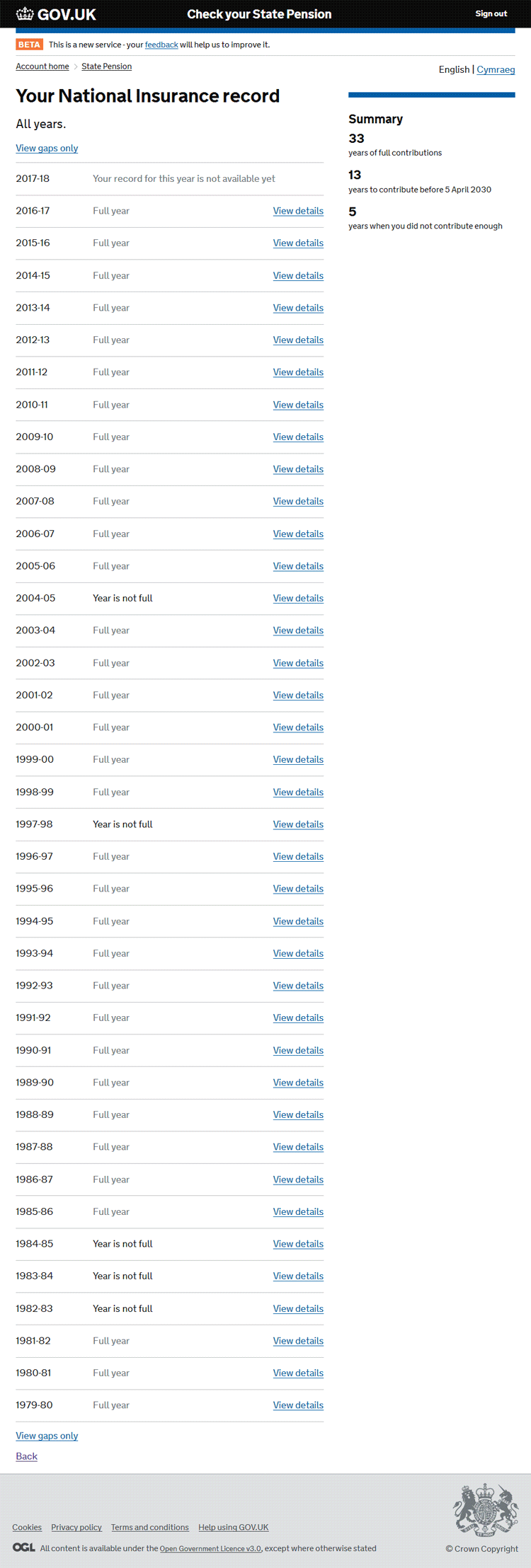 One of the core elements of MTD is the Personal Tax Account (PTA). In years to come, each UK individual is likely to become very used to logging into their Personal Tax Account on the HMRC website. In fact, these already exist and most, if not all, UK taxpayers can already access them if they want to. When accessed, it's quite interesting to see the huge amount of data already accessible via your own PTA if you care to take a look. You may be surprised just how much data they contain for you. For those not yet ready to take the plunge, we've taken a look for you, as you'll see. And, so far, we are quite impressed. First, though, perhaps you'd like to sign up to view your PTA account for the first time. If you do this you can perhaps follow along with our notes and see how similar records in your PTA are to those in our demonstration account. For example, we found the National Insurance Record and resulting State
 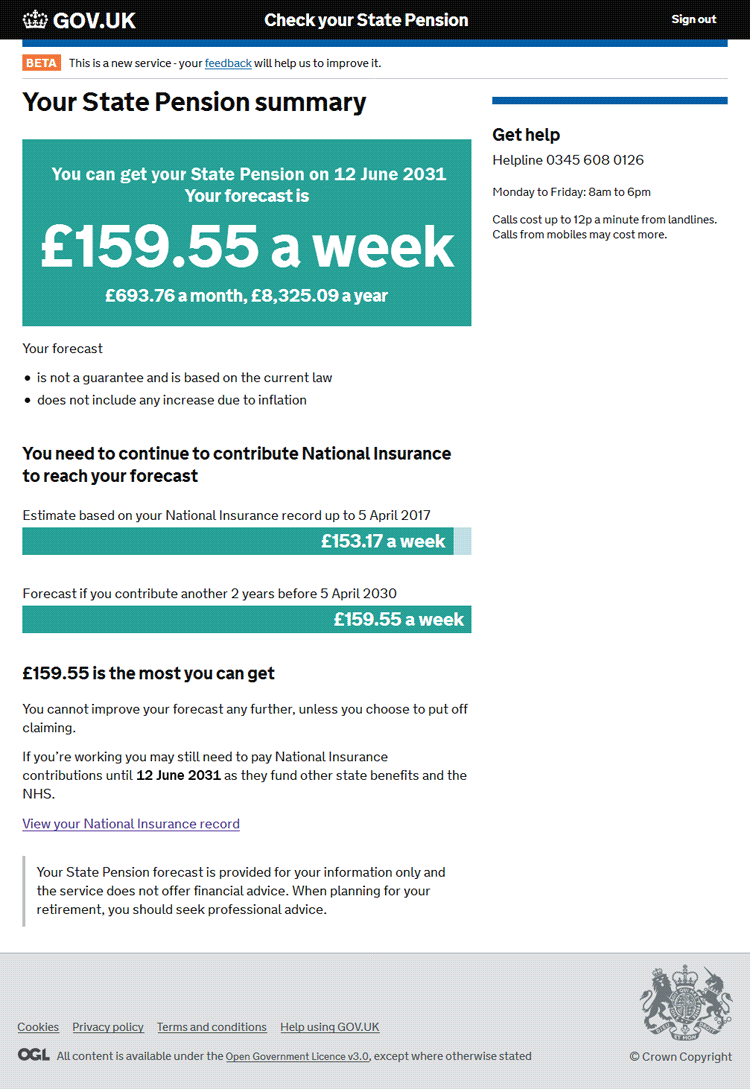 Pension Forecast of particular interest, but that's just indicative of many different areas available in the new PTAs. Before starting, though, take a look at our quick word about security* because it's important to keep your personal details safe and out of harm's way. Anyway, if and when you'd like to take a look at your own PTA, head off to this page which will give you various options depending on whether you already have a Government Gateway account (to clarify, you will need a Government Gateway account before you can gain access to your PTA). If you've used HMRC online services before, you'll already have a Government Gateway account. If not, follow the instructions on that page in order to set one up for the first time. To do that, you'll need your National Insurance (NI) number and proof of identity which can include your bank account details, a P60, your 3 most recent payslips or your passport number and expiry date. It takes about 15 minutes to set up if you have these to hand. So, assuming you now have your Government Gateway account access credentials sorted and to hand, you can sign into your Personal Tax Account (PTA) here using your User ID and password.
When first logging in as a new user, the HMRC system may prompt you to set up an additional level of login security. For example, setting up access codes by SMS (you'll then be sent a code to enter into the screen when logging in, to prove you are who you say you are. You'll be sent a new access code to your mobile phone every time you sign in. It's rather like 2FA (2 Factor Authentication) for those who are familiar with that). You may additionally be asked some security questions, again to protect your data from hackers. In my test I was asked for my full name, date of birth, passport number and similar information (quite a bit actually). This type of heavy duty disclosure is another reason to make sure you have read our security* pointers before disclosing anything sensitive online.
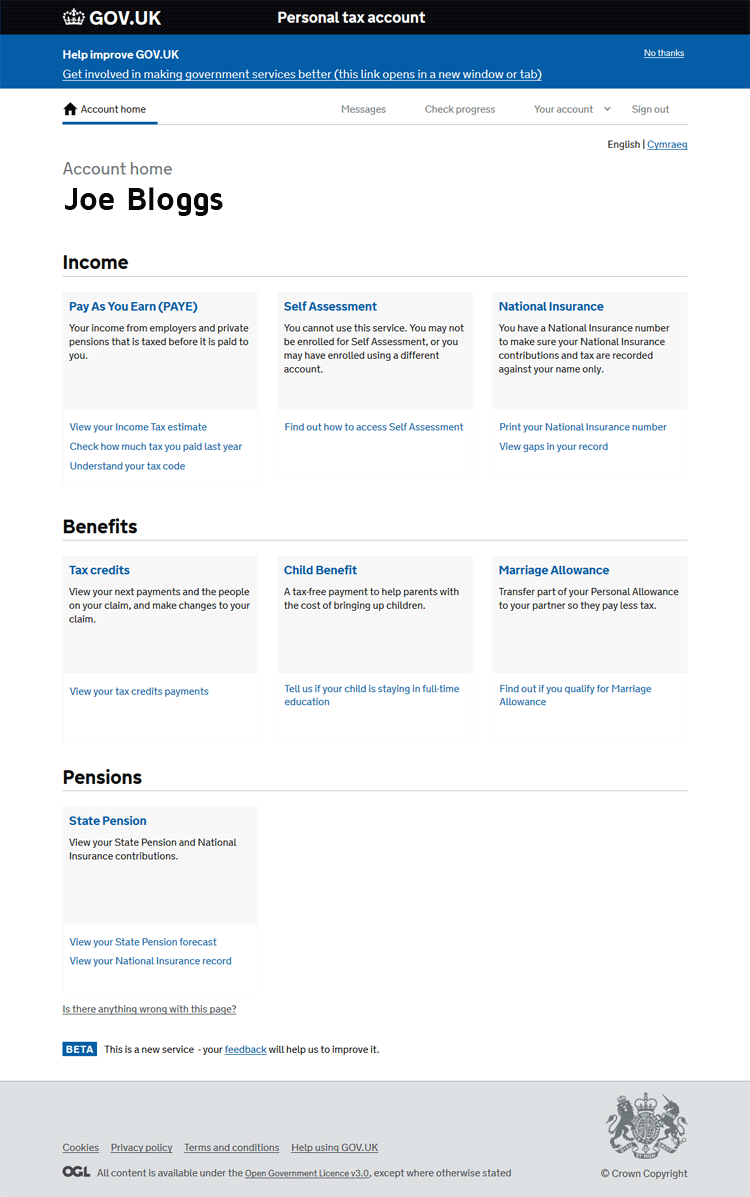 Once logged in you'll be met with a screen similar to the image shown right, with your name at the top: As you can see, it contains several sections. From your Personal Tax Account, you can:

With the increasing interest and focus from consumers on sustainable and socially responsible investing, more and more financial advisors have started to offer SRI portfolios designed to more effectively align a client’s investment dollars with their stated values. However, the next frontier in these values-based investment approaches is not merely to allocate client dollars to SRI portfolios, but to operate the financial advisory business itself in a manner that effectively considers its environmental, social, and community impacts.
In this guest post, Georgia Lee Hussey and Liliya Jones of Modernist Financial provide a guide to making values-based commitments as a financial advisory firm through becoming B Corp Certified. The B Corp certification is not an alternative to other corporate structures like an S or C corp, but a process that entails making a legal commitment (through the business’ bylaws or operating agreement) that affirms the existing S or C corp (or partnership or LLC) business entity’s commitment to consider its impact on all stakeholders (rather than just maximizing shareholder value). After recently going through the process of getting their RIA to become B Corp Certified themselves, Georgia and Liliya outline what a B Corp is, why financial advisors should consider getting their firms B Corp Certified, and how to go about the process.
When a financial advisory firm wishes to become B Corp Certified, the advisory firm owner must first take an assessment which evaluates their practices in the areas of governance, workers, community, environment, and customers. After completing this assessment, firms will be required to provide some documentation of select items, and possibly create a specific action plan for bringing their firm up to required standards. Once a firm meets the criteria required by B Labs – which grants the B Corp certification – they are then required to make the necessary changes to their corporate documents in order to make their commitment to ethical practices legally binding.
Financial advisors interested in earning B Corporation® certification have many ways to ensure they are considering all stakeholders in their decision making, from implementing ESG portfolios and promoting diversity and inclusion in the industry, to investing in their employees and considering the environmental impact of their firm. Ultimately, being a B Corporation® can be a way to truly apply a values-based perspective beyond the portfolio itself. Which can result in a new way to build trust with prospective clients – especially those who already have a strong values-focused oriented to where they invest and who they do business with – as well as connect with a broader community of like-minded socially-conscious entrepreneurs, and provide an environment that is more attractive to next generation advisors!
Enjoy the current installment of “weekend reading for financial planners” – this week’s edition kicks off with the big buzz in the advisory world this week… a major feature article in the Wall Street Journal dubbed “The Morningstar Mirage” that notes how Morningstar star ratings based on past performance are a huge driver of mutual fund asset flows but have at best only limited predictive value of future performance (though the Journal authors, as well as Morningstar in its response, both note that highly rated funds are still at least somewhat more likely to outperform than just picking mutual funds at random!).
Also in the news this week was a separate major announcement from Morningstar, that it’s DoL fiduciary proposal tool, the “Best Interests Scorecard”, is now available as an add-on to the Morningstar Advisor Workstation. And the Investment Management Consultants Association (IMCA) announced that it is rebranding to the Investments & Wealth Institute (IWI), and has acquired the Retirement Management Analyst (RMA) designation as part of its growing investments and wealth management focus.
From there, we have a number of marketing and business development articles this week, including: a review of what a “marketing funnel” really is, and how it’s relevant for financial advisors; a discussion of how most advisor websites are built for the wrong purpose, aiming to educate about the advisor’s firm or get a prospective client to call when really it should just focus on getting a prospect’s email address instead; a fascinating research survey about where ultra-HNW investors go for their financial news that finds HNW investors tend to rely on both traditional media, social media, and an advisor’s own communication (and that younger HNW clients are even more likely to rely on the advisor’s communication!); how digital marketing lessons from Silicon Valley can be applied for financial advisors, particularly when it comes to “influencer marketing”; why your answer to the simple question “How’s It Going?” can unwittingly deter clients from giving you referrals; and how the best way to build Center Of Influence (COI) referrals is not to just try to find “good” COIs, but instead to work more deeply with the COIs your clients already use, where you can turn deepening client engagement with a mutual client into COI referrals instead!
We wrap up with three interesting articles, all focused around the theme of taking a fresh look at popular themes: the first explores how advisors should beware about entirely rebranding themselves as behavioral coaches and accountability partners, because the truth is that most people don’t actually want to always be held accountable for everything (and at best, advisors need to be more sensitive about how to frame accountability in a positive, future-focused manner); the second looks at the simple concept of financial milestones, and the kinds of common milestones that can (and should) be celebrated with clients; and the last looks at how the recent wave of natural disasters, from hurricanes to fires, have been causing people to question how much “stuff” they really need… and not just those who are impacted by the disaster, and may have lost everything and need to start over, but even those of us who only saw the events on the news, but still find ourselves questioning whether we have too much “stuff” and how we could better focus on the things that really matter.
Enjoy the “light” reading!
